
Sheikh Hasina, who quit as prime minister and fled Bangladesh, will be back in the country as soon as democracy is restored, his son Sajeeb Wazed Joy said on Thursday and blamed Pakistan's intelligence agency, ISI, for fuelling the ongoing unrest in the country.

While tenants can't escape the impact of rising rentals entirely, they can adopt a few strategies to reduce the impact.

The company has also advised power firms to use trucks to carry coal from remote mines, like the Amrapali open cast pit in eastern Jharkhand state.

Strong performance by its US subsidiary Novelis and better returns in the copper business helped Hindalco Industries post consolidated revenue growth of 2 per cent quarter-on-quarter (Q-o-Q) to Rs 54,100 crore in the July-September quarter of 2023-23 (Q2FY24). Novelis' Flat Rolled Products (FRP) volumes grew 6 per cent Q-o-Q to 933,000 tonnes (down 5.2 per cent Y-o-Y) on better North American and European volumes. The consolidated earnings before interest, taxes, depreciation, and amortization (EBITDA) declined 2 per cent Q-o-Q to Rs 5,610 crore despite lower input costs in India and better Novelis performance.

In a meeting with stakeholders last week, the authority mooted setting up a Special Purpose Vehicle along with airlines and state-owned oil marketing companies to develop common infrastructure to import ATF, among others, at Chennai and Kolkata airports. While AAI and OMCs will hold 76 per cent in the proposed SPV, the airlines will participate in the remaining 24 per cent equity.

Ahead of a meeting of oil producers' cartel OPEC, India on Tuesday said the current oil prices are "very challenging" and rates need to be a "little bit sober" lest they impact a consumption-led recovery of the global economy. Oil Minister Dharmendra Pradhan, who last week again urged OPEC to phase out its production cuts, said India is a price-sensitive market and it will buy oil wherever it gets competitive rates. The rebound in international oil prices from lows hit last month on the back of demand recovery has led to a spike in petrol and diesel retail prices in India.

India on Wednesday asserted that its energy purchases from Russia remain 'minuscule' in comparison to its total consumption and that legitimate energy transactions cannot be politicised as energy export from Russia are yet to be sanctioned. The world's third-biggest oil-consuming and importing nation has in recent weeks snapped few cargoes available from Russia at deep discounts as part of its plans to diversify its import basket. These purchases have been commented upon.

The Jordanian-drafted resolution did not make any mention of the militant group Hamas, with the US expressing outrage at the "omission".

Rising crude oil prices and muted passenger traffic in the July-September quarter (second quarter, or Q2) of 2023-24 (FY24) have raised concerns about the profitability of listed aviation players. These two concerns have caused the stock of InterGlobe Aviation (IndiGo), the largest player in the sector, to slip by 11 per cent since its highs at the end of July. Nuvama Research expects yields to cool down in the near term due to seasonality, rising crude oil prices, and higher capacity.

To offset the impact of high import costs, the Planning Commission had said that Coal India Ltd should adopt a pooling formula on prices by combining rates of imported and domestic coal.

Key infrastructure sectors -- from railways to power, and from coal to petroleum -- will not only be part of the achievements but promises too, as the BJP fights to get a third term at the Centre.

In a joint statement after their talks, President Biden and Prime Minister Modi expressed their deep concern over the conflict in Ukraine and mourned its terrible and tragic humanitarian consequences.

The latest numbers showed 34 of India's 90 power stations were running on critical coal stocks.

'In terms of semiconductors, challenges do remain in the pan industry, but I think we are much better than where we were a year or so back.'

Even as the Group of Seven (G7) price cap on Russian crude oil enters into force as of December 5, India has been assured it will continue to receive the existing deep discounts on Russian oil, for the time being, informed officials. "We have been assured by our Russian partners of uninterrupted crude supplies at the existing rates for the time being. "There were a lot of reports of changes in (India's) buying patterns after the global price cap took hold.

After Reliance Industries Ltd and its partner bp plc of the UK, Nayara Energy - the nation's largest private fuel retailer - has started selling petrol and diesel at Re 1 less than the fuel sold by state-owned retailers, officials said. While state-owned Indian Oil Corporation (IOC), Bharat Petroleum Corporation Ltd (BPCL) and Hindustan Petroleum Corporation Ltd (HPCL) continue to hold prices despite a drop in international rates, private fuel retailers have started passing on the benefit to consumers. "To further stimulate domestic consumption and cater to local customers better, we have introduced a Re 1 discount in our retail outlets until the end of June 2023," a spokesperson for Nayara Energy said.

India is 'deeply concerned' at the deteriorating security situation and astounding loss of civilian lives in the ongoing conflict.

Average monthly GST collection rose from Rs 90,000 crore during the first year of its implementation -- 2017-2018 -- to Rs 1.68 trillion during 2023-2024, representing an 87 per cent rise.

Six months after Nepal was devastated by a massive earthquake, relief efforts are literally running out of steam as weeks of protests against a new constitution have led to a critical shortage of fuel. Naomi Mihara reports on how NGOs are racing against time to reach aid to the people before winter sets in.
Russia dominated Saudi Arabia in oil supplies as the world's fastest-growing major economy for fossil fuels in October, relegating the Kingdom to third place. Iraq was India's top oil supplier, according to the data from Vortexa. Saudi Arabia's decline in India's oil market has coincided with Russia's rise, and ironically occurred amid growing diplomatic ties between Riyadh and New Delhi. Saudi Crown Prince Mohammed bin Salman Al Saud is visiting India this month to meet Prime Minister Narendra Modi.

Prime Minister Narendra Modi's state visit to the US is expected to see discussion on India's possible entry into a US-led global alliance on critical minerals, officials told Business Standard. In June last year, the US, the European Union, and other G7 partners launched the Minerals Security Partnership to ensure that China did not further strengthen its grip on supplies of critical minerals the world over. Various ministries, including the Ministry of Finance, have communicated to the Ministry of External Affairs to explore the possibility of India joining the partnership, officials said.

'China is struggling to get out of its property bubble.' 'Japan took 35 years to walk out of its equity bubble.' 'Bubbles can be difficult to forecast.'

For India, it is a symbol of will and a successful feat of arms.
Commerce Minister Kamal Nath on Friday announced that jet fuel supplies to long-distance flights of international carriers would be treated as exports.

Finance Minister Nirmala Sitharaman on Thursday said Pradhanmantri Suryodaya Yojana will enable one crore families to get up to 300 units of free electricity monthly and help them save up to Rs 18,000 annually. "There is provision of Rs 10,000 crore for rooftop solar (scheme) in the Budget," said finance secretary T V Somanathan in press conference on Budget later in the day. Earlier in the day Sitharaman in her interim Budget speech said through rooftop solarisation, one crore households will be enabled to obtain up to 300 units of free electricity each month.
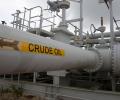
Indian imports of Russian oil plunged by a record in August month-on-month (M-o-M) as discounts on the fuel shrank in tandem with rising Brent oil prices. Higher crude prices will drive inflation or hurt earnings at oil companies and India's fiscal position if such spikes are not passed on to consumers. Indian purchases of Russian crude declined by around 24 per cent in August from July to the lowest level since January, with refiners expecting volumes to drop further amid rising rates of Russian benchmark Urals grade, substantial stocks at refiners, and planned maintenance at Indian refineries, according to ship tracking data and industry officials.

To ramp up domestic battery manufacturing capacity and reduce the dependence on imports, the government has initiated talks with a few lithium-rich countries to supply the mineral to Indian companies, industry sources informed Business Standard. The Ministry of External Affairs (MEA) held a meeting with the ambassadors of countries, including Argentina, Chile, and Bolivia, among others, to put forth its request.
India's inability to address infrastructure is legendary, barring historical exceptions. It shows in electricity shortages, inadequate sanitation, broadband, railway services, airlines and roads. This explores the common strands of such failures, and a possible alternative drawing on China's approach to development.

The limited availability of flexible (flex)-fuel vehicles in the Indian market and the slow rollout of ethanol-blended petrol by oil-marketing companies (OMCs) remain major obstacles to achieving widespread use of biofuels in the transportation sector in India. Recently, two Union ministers have emphasised India's biofuel potential, arguing that it has the capacity and potential to lead a transition towards widespread biofuel adoption. Road Transport Minister Nitin Gadkari signalled that this transition is well underway and urged car manufacturers to quickly adapt and introduce new biofuel-run vehicles, lest the government resort to taxing diesel vehicles.

Adani Group on Thursday said it has formed a 50:50 joint venture with Japanese conglomerate Kowa Group for sale of green hydrogen in Japan, Taiwan and Hawaii markets. Billionaire Gautam Adani-led conglomerate is investing up to $50 billion over the next 10 years in setting up a fully integrated green hydrogen ecosystem in India. This includes the production of 1 million tonne of green hydrogen in the initial phase which will be ramped up to 3 million tonne later.
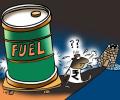
India must be prepared for a big, fat fuel import bill in FY23 - barring any further avatars of the Covid virus - as refiners crank up runs, or crude processing rates, to meet the growing demand for fuels, and crude prices soar. Capacity additions by an Indian state-run refiner will reinforce the need for foreign crude. Demand for all fuels is expected to increase by 3-8 per cent next fiscal from 2021-22, reaching pre-pandemic levels, according to analysts and industry experts.
Qatar and Australia are likely to supply fuel for restarting the $3 billion Dabhol Power Project in Maharasthra from the fourth quarter of 2006.

NPCIL executive director (corporate planning) S Thakur said fuel supply to its plants is now much better compared to the situation 2-3 years ago.

Asia's richest man, Mukesh Ambani, signed off an address to employees last week by assuring them that 2024 would be better than 2023 for both Reliance Industries and India. Ambani isn't an exception. Promoters and their representatives from several other conglomerates have expressed similar optimism.
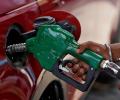
'Pump prices of petrol and diesel have reached historical highs. An unwinding of taxes on petroleum products by both the Centre and the states could ease the cost-push pressures,' the Monetary Policy Committee (MPC) has said.

Its association with India is over 70 years old and spans both civil and military aviation. The Douglas DC-3 transport aircraft used by the air force beginning the 1940s and the iconic Boeing 747 aircraft flown by Air India, both had Pratt & Whitney (P&W) engines. The Indian Air Force's present-day, heavy-lift C-17 Globemaster III and the yet-to-be-inducted C-295 planes, too, have P&W power plants.

The automobile sector has started seeing volume growth, the crucial economy segment included. Maruti Suzuki India (MSIL) could be a big beneficiary as the country's largest passenger vehicle (PV) maker has seen several favourable developments including volume recovery. Demand for its new sports utility vehicles (SUVs) appears to be good, and the company has 4 lakh outstanding orders by April 2023, (up from 3.6 lakhs in January 2023). Siam (Society of Indian Automobile Manufacturers) estimates that passenger vehicle demand would grow by 5-7 per cent in the 2023-24 financial year (FY24) and MSIL is likely to beat the market growth.

India appears poised to sustain its growth in a more durable way than before with the economy carrying the momentum from FY23 into the current fiscal year, the Annual Economic Review for 2022-23 released by the finance ministry on Thursday said. However, the report cautioned that escalation of geopolitical stress, enhanced volatility in global financial systems, sharp price correction in global stock markets, a high magnitude of El-Nino impact, and modest trade activity and FDI inflows, are factors that could constrain the pace of growth. "Should these developments deepen and dampen growth in the subsequent quarters, the external sector may challenge India's growth outlook for FY24," the finance ministry said.

Lower crude oil costs and higher marketing margins are expected to raise the fortunes of oil marketing companies (OMCs) in the first quarter (Q1) of 2023-24 (FY24), while city gas distribution (CGD) companies could also benefit from lower spot prices of liquefied natural gas (LNG). However, in a break from the past, growth trends are expected to diverge for various segments within the broad energy sector. Analysts expect the earnings from gas production to go down for upstream national oil and gas companies such as Oil and Natural Gas Corporation (ONGC) and Oil India (OIL) due to the introduction of the new domestic gas pricing regime on April 1. After showing steep losses over the first half of 2022-23 (FY23), the marketing margins of OMCs have steadily recovered in four months.
African joint venture Cennergi, formed six months earlier, already executing projects
